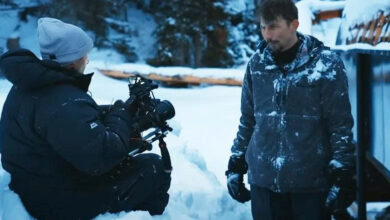
Making of Resident Alien | David Dobkin, Chris Sheridan, and Shane Hurlbut ASC
Making of Resident Alien | David Dobkin, Chris Sheridan, and Shane Hurlbut ASC
Making of Resident Alien | David Dobkin, Chris Sheridan, and Shane Hurlbut ASC
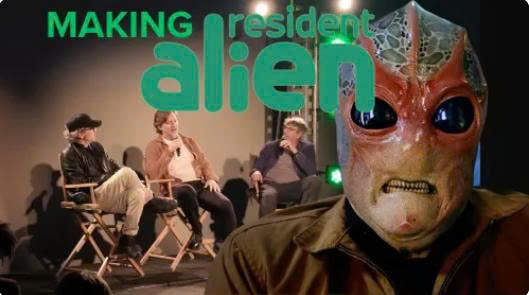
This conversation is all about the triangle of communication.
And uh, I really wanted to—
David Doppkin is an incredible director, and I had the amazing ability of working with this man on Resident Alien as well as Into the Badlands.
He’s the type of director that pushes you in ways you might not want to go.
And that’s a great thing.
I love that, because I love when directors put you in a position where you’re like,
“Hey, this is what we’re doing, and we’ve got to figure it out.”
Always pushing yourself out of your comfort zone—
that is my sweet spot.
And you have Chris Sheridan, who, as a writer-showrunner,
the script was literally baked perfectly when it came to us.
And I remember, David, you said,
“You know, Shane, the script is—I don’t want to change it.
I love where I’m at.”




And I just want to talk about how this triangle of communication started,
and where we’re going to start—like, in the beginning—
when the two of you first got together
and where that was in this casting.
Because obviously, you had to find a leading man
that literally had to become a doctor but was an alien.
And that is a tough find.
So take us through that process of how that all came through.
Yeah, it was—
I mean, the casting is brutal anyway.
But trying to—like, I wrote this character,
this is Resident Alien, which premieres tonight on USA/SYFY at 11 p.m.,
because nothing makes sense anymore.
Luckily, we got streaming.
So, what were we talking about?
Casting—oh yeah.
When I wrote that character in the script,
I had a concept in my head of what I thought this character was.
And then these incredible actors started coming in auditioning for this role,
and they were doing what I thought they would be doing—
and I didn’t like any of it.
And they were incredible actors.
And I’m like, “Oh, is it the script? What am I doing wrong?”
We just kept seeing actor after actor.
We opened it up, saw actors from England and Ireland.
We saw so many people.
And in the meantime, we had cast everybody else.
We were shooting in about a week and a half or two weeks.
We still didn’t have the lead yet—
and we had seen over a hundred people for this.
Over a hundred.
And then, so when you’re casting,
there’s people who come in and read for you,
but there’s a section of actors who don’t read—
they’re offer-only.
It was such a specific role
that I was afraid of giving it to someone without seeing what they’d do.
But a lot of those actors are really great actors,
and I was curious what they would do with it.
And David had a great idea,
which was: send a bunch of them the script
and just give them the choice—come in and read for it, or not.
And six of them agreed.
And Alan Tudyk was one of them.
We had a Zoom with him the night before his audition.
We were in Vancouver—
we were going to shoot in a couple weeks—
so we Skype-called him.
(Yeah, I think it was still Skype at the time. They dropped the ball over COVID, didn’t they?)
So what I love is,
I’m already up there prepping the movie, and we don’t even have the lead.
Don’t have the lead!
But we got on that Skype with him the night before his audition
just to talk about the role.
And by the time we got off that call,
we looked at each other and said,
“Well, I think this is the guy.”
David loved him too.
Then we had the audition the next day.
And what he did with it was not what I expected.
Not what I thought it would be.
It was all the same words,
but through the genius of Alan Tudyk—
and it was unbelievable.
That’s the character.
And look, you get lucky sometimes.
We could’ve gone with someone we’d already seen—
one of the hundred great people—
and hoped it would work.
So much about casting is luck and perseverance
and just waiting until you find the right person.
Not settling unless they’re really incredible.
This conversation is all about the triangle of communication.
And uh, I really wanted to—
David Doppkin is an incredible director,
and I had the amazing ability of working with this man
on Resident Alien as well as Into the Bad Lands.
He’s the type of director that pushes you
in ways that you might not want to go.
And that’s a great thing.
I love that, because I love when directors put you in a position
where you’re like,
“Hey, this is what we’re doing, and we’ve got to figure it out.”
Always pushing yourself out of your comfort zone—
that is my sweet spot.
And you have Chris Sheridan,
who as a writer-showrunner,
the script was literally baked perfectly when it came to us.
And I remember, David, you said,
“You know, Shane, the script is — I don’t want to change it.
I love where I’m at.”
And I just want to talk about how this triangle of communication started,
and where we’re going to start — like in the beginning —
when the two of you first got together,
and where that was in this casting.
Because obviously you had to find a leading man
that literally had to become a doctor but was an alien,
and that is a tough find.
So take us through that process of how that all came through.