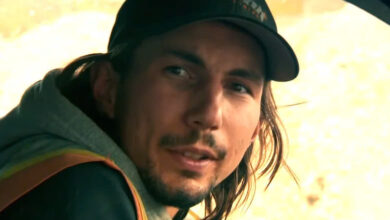
How Much Money Did Parker Lose On Machinery Breakdowns?
How Much Money Did Parker Lose On Machinery Breakdowns?
How Much Money Did Parker Lose On Machinery Breakdowns?
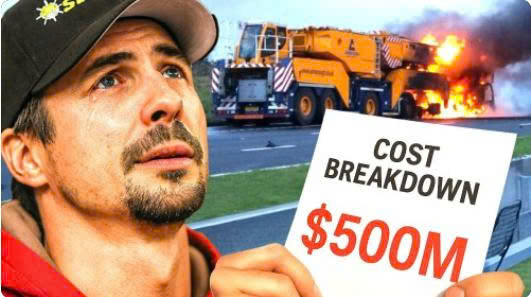
Now the million-dollar question.
Is there enough gold in this ground to make this cut worthwhile?
Mining for gold is a brutal, unforgiving business.
For more than a decade, the world has watched Parker Schnobble go from a determined teenager into a certified Klondike king.
He is a legend known for his incredible hauls and relentless ambition.
Parker is sitting on top of the world.
He has visions that he’s going to make thousands of dollars every day.
And I hope he’s right.
But what the cameras often show, but we rarely tally up, is the catastrophic price he pays every single time a piece of his multi-million-dollar iron empire grinds to a halt.
These numbers are going to hit you like a D10 dozer.
Total breakdown costs: $0.
The early days, the price of old iron.





Parker’s journey into the gold mining world began for real back in season 2.
He was just a teenager taking over his beloved grandfather, John Schnobble’s, Big Nugget Mine in his home state of Alaska.
This was not a glamorous start with shiny new machines.
Truth be told, it was a gritty, high-stakes gamble using old, worn-out equipment that had seen better days.
The machines were barely holding together, and the breakdowns started almost immediately.
What many people overlooked is that this wasn’t just about finding gold.
It was about honoring his grandfather’s legacy.
The pressure on him was immense.
In those early episodes, the show made it clear that keeping the tired iron running was a battle in itself.
The narrator revealed that Parker had to shell out a massive $50,000 just to repair the essential water pumps and fix the worn-out tracks on his dozers.
This was the bare minimum to even have a shot at a season.
Rest in peace, little pump.
Sometimes it’s hard to see what’s wrong with this one.
Uh, it’s pretty clear it blew up pretty hard.
$50,000 is a huge sum for any teenager, let alone for one trying to run a gold mine.
This was the price of admission into the brutal world of mining.
Let’s get the counter started.
Kaching. Counter spins and stops at $50,000.
By season 3, Parker stayed at Big Nugget Mine, but his ambition was bigger than ever.
He pushed the old equipment past its limits, and the machines pushed back.
The worst disaster hit when a conveyor belt snapped mid-run, silencing the mine and costing him $40,000 in repairs.
The Alaskan ground was unforgiving, but the repair bills were even more so.
The counter keeps on climbing, counter spins, and stops at $90,000.
The Yukon gamble—breakdowns in the big leagues.
Season 4 was the year everything changed.
Parker, now 18 years old, made a decision that would define his entire career.
He left the familiar ground of his family’s mine in Alaska and took a massive leap of faith, heading to the legendary gold fields of the Yukon.
He leased the Scribner Creek claim from the Klondike King himself, Tony Beats.
Stepping into the big leagues meant playing with big league problems.
Our only option is to keep the plant running.
How much gold are we losing out the sluice? You know what I mean?
I don’t know about that, but I hate stopping.
You know, it’s time we’re not making money.
The terrain in the Yukon was completely different from what he was used to.
It was incredibly abrasive, filled with sharp grinding rocks that acted like sandpaper on his machinery.
His wash plant, the heart of his entire operation, started to get shredded.
He was losing gold through newly formed holes, and the whole structure was at risk of collapse.
He had to make a choice: shut down or spend big to reinforce it.
He chose to fight.
As shown on screen, the repairs and upgrades to armor the wash plant against the brutal ground cost him a staggering $100,000.
That is a six-figure hit just to survive his first Yukon season.
The breakdowns were getting more expensive.
Counter spins and stops at $190,000.
In season five, Parker was determined to prove his first Yukon success wasn’t a fluke.
But the challenges just kept coming.
The season was plagued by massive floods that swamped his cuts and hammered his equipment.
The constant exposure to water and mud caused a series of mechanical failures that pushed his crew to their breaking point.
From blown hydraulic lines to seized engines, it felt like every time they fixed one thing, two more things broke.
According to the show’s invoices that were flashed on screen, the constant battle to keep the machines running cost him another $150,000 in repairs.
The Yukon does not play nice.
And as Parker was learning, neither do the relentless repair bills.
Counter spins and stops at $340,000.
By season 6, Parker was no longer the new kid in the Yukon.
He was a seasoned miner with a reputation for success, but his machines were not invincible.
He was pushing his equipment to the absolute limit, running 24 hours a day to maximize his gold haul.
That kind of pace takes a massive toll.
The most catastrophic failure of the season happened when the transmission on a key piece of his heavy equipment, one of his main rock trucks, completely failed.
Without it, he could not feed his wash plant.
It was a crippling blow.
Now we got to slide this transmission in, hook everything up, cross our fingers, and hope it all works right.
The cost to get a new transmission and have it installed in the remote wilderness of the Yukon was a clean $100,000.
A figure that was displayed right on the screen.
The counter keeps climbing as the breakdowns just keep piling up season after painful season.
Counter spins and stops at $440,000.
Pushing the limits, bigger risks, bigger repairs.
Season 7 was a record-breaking year for Parker.
He was on track to have his best season ever, but the ground seemed to be fighting back with a vengeance.
What many people don’t realize is that mining isn’t just about digging.
It’s about dealing with an unstable and dangerous environment.
That year, his operation was hit by a series of rock slides.
These were not small events.
Tons of rock and earth came crashing down, damaging the equipment that was working in the cut below.
The repairs for the smashed cabs, bent frames, and damaged hydraulics on his machinery were extensive.
The show noted that the cost for these repairs alone was $150,000.
Every single season, the machines take a brutal beating, and every single season, Parker has to pay the price.
Counter spins and stops at $590,000.
In season 8, the mechanical gremlins seemed to be everywhere.
It was not one single catastrophic failure, but a death by a thousand cuts.
His water pumps, the lifeline of his sluicing operation, were constantly failing.
You know, this is a very catastrophic failure.
Definitely the worst condition I’ve ever seen any of our equipment.
Uh, there’s no coming back from this one.
This motor’s junk.
The worn-out components on his excavators and dozers were breaking down at an alarming rate.
It was a constant battle for his mechanics to keep everything running.
The show compiled the figures from the numerous on-screen repair receipts, and the total cost to keep the wash plant and all the support equipment running for the season was a jaw-dropping $200,000.
The breakdowns never stop, and neither do the bills.
He was now spending more on repairs in a single season than his entire budget from just a few years earlier.
Counter spins and stops at $790,000.
Season 9 saw Parker chasing his biggest gold haul yet, pushing his team and his machines into uncharted territory.
But the rich ground he was on had a nasty secret.
It was filled with the same abrasive, sharp rock that had plagued him in his first Yukon season.
This unforgiving material was tearing through the steel of his wash plant at an incredible rate.
To prevent another catastrophic failure, he had to invest in brand-new custom-made armored steel liners and make other major repairs.
As shown on screen, this crucial preventative maintenance set him back another $150,000.
The counter is not slowing down.
The price of gold was high, but the price of getting it out of the ground was getting higher every single day.
Counter spins and stops at $940,000.
By season 10, the breakdowns were becoming more complex and more expensive than ever before.
Parker was running some of the biggest and most powerful machinery in the Klondike.
And when they broke, the repair bills were astronomical.
The biggest financial hit of the season came from a major dozer repair.
Mike, we need this right now.
There’s a bunch of moss in here. Got up against the engine. Oh. Seriously.
A catastrophic failure deep within the engine caused a complete shutdown.
The invoices for the parts and labor were displayed on the show, and the total cost was a gut-wrenching $175,000.
Big machines mean bigger horsepower, but they also mean much, much bigger repair bills.
The breakdowns were now costing more than some of his entire first wash plants.
Counter spins and stops at $1,115,000.
The later years—no end to mechanical mayhem.
Season 11 brought a set of challenges that no one could have predicted.
The global pandemic changed everything, creating supply chain issues and making it harder to get parts and mechanics.
Despite this, the ground did not care.
The equipment took a relentless beating as Parker pushed to make his season a success against all odds.
The on-screen figures noted that the essential repairs to keep the operation running safely under these difficult conditions cost him another $100,000.
Even a global crisis could not stop the constant onslaught of breakdowns.
For a gold miner, the machinery is a constant source of stress.
Counter spins and stops at $1,215,000.
In season 12, Parker’s biggest enemy was not the permafrost or the rock, but water.
A series of unexpected flash floods raged through his claim, and his key machinery was caught in the deluge.
The water wrecked engines, destroyed electrical systems, and filled gearboxes with silt and debris.
The repair bills were absolutely massive.
According to the show, the cost to fix the flood-wrecked machinery hit an incredible $250,000.
The elements and the equipment are Parker’s two toughest opponents.
And that season, they teamed up against him.
We’re in absolute chaos.
The two pumps we got in there just aren’t working.
They’re not gaining on the water.
I think we’re just going to have to pull the pump from the wash plant, which I just don’t know if that’s right.
Counter spins and stops at $1,465,000.
Season 13 had its own share of mechanical nightmares.
The terrain on his new ground was incredibly harsh, with steep slopes and rough, rocky paths.
This put an enormous strain on his fleet of rock trucks.
One of his main trucks suffered a major failure caused directly by the brutal terrain.
The frame cracked and the suspension was destroyed.
As shown on screen, the cost for this single massive truck repair was $200,000.
The Yukon just keeps finding new ways to test Parker’s machines and his wallet.
Counter spins and stops at $1,665,000.
In season 14, the breakdowns continued to plague the operation.
After years of non-stop 24/7 use, the heavy equipment was showing its age.
The relentless wear and tear from moving millions of cubic yards of dirt resulted in a constant stream of repairs.
Per the show’s figures, the cumulative cost of repairs to damaged equipment from the heavy use throughout the season was another $200,000.
The repair bills just keep on coming—a constant drain on his potential profits.
Counter spins and stops at $1,865,000.
The Dominion Epic—season 15’s mechanical disasters.
Season 15 was Parker’s boldest and most expensive move yet.
He shifted his entire operation to a massive new claim on Dominion Creek.
The ground was legendary for its gold, but it was also known for being brutally tough on equipment.
Right now, we’re really struggling with just having enough personnel and, uh, you know, enough big equipment down at the money pit to keep up with everything.
It did not take long for the ground to take its first bite.
The powerful ripper shank on the back of his main dozer, a thick piece of solid steel designed to tear through permafrost, snapped clean in half.
The on-screen cost to fix it was $18,000.
Counter spins and stops at $1,883,000.
But that was just a warm-up.
The biggest disaster of the season was just around the corner.
His massive new rock truck suffered a catastrophic transmission failure.
It was a complete and total meltdown.
The cost to repair it was a mind-boggling $200,000.
But here’s the kicker—the parts were so specialized that they had to be air-freighted from the United States to the remote Yukon.
That emergency shipping cost an extra $25,000, bringing the total for one single breakdown to $225,000 per the show’s invoices.
That is a massive, season-threatening hit for just one breakdown.
Counter spins and stops at $2,108,000.
As the season wore on, the smaller breakdowns continued to add up.
A montage of on-screen costs for new tires, broken water pumps, and endless welding supplies to patch up the worn-out steel added another $22,000 to the growing total.
Every little fix adds up, chipping away at the final gold total.
Counter spins and stops at $2,130,000.
The final tally—a career of costly breakdowns.
When you add it all up across all 15 seasons of Gold Rush, Parker Schnobble’s documented on-screen machinery breakdowns come to a staggering, almost unbelievable total of $2,130,000.
Every single snapped belt, every busted transmission, every worn-out pump, and every cracked frame has been a direct and painful hit to his bottom line.
And yet, the thing nobody tells you is that this number is probably just the tip of the iceberg, representing only what the cameras decided to show us.
Still, his incredible gold hauls, totaling over 60,000 ounces and worth hundreds of millions of dollars, show that he has somehow beaten the odds and come out on top.
In the brutal world of the Klondike, broken machines are simply the cost of doing business when you are chasing a golden dream.
Parker has spent over $2.1 million on documented repairs.
It is a brutal reminder that mining gold is a war of attrition.
Was the cost of all that broken steel worth the fortune he found?
Let us know. Like and subscribe for more.