Storms, Bloodlines, and Billion-Dollar Crabs: Inside Deadliest Catch’s Most Explosive Recent Seasons
Storms, Bloodlines, and Billion-Dollar Crabs: Inside Deadliest Catch’s Most Explosive Recent Seasons
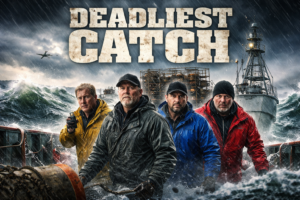
The Bering Sea has never been forgiving—but in the most recent seasons of Deadliest Catch, it has become downright brutal. As Discovery Channel’s long-running reality series pushes past two decades on air, the show has evolved from a gritty documentary about crab fishing into a high-stakes saga of legacy, survival, and personal reckoning. Seasons 18 through 21, in particular, have delivered some of the most intense, emotional, and unpredictable moments in the show’s history.
A Fishery in Crisis
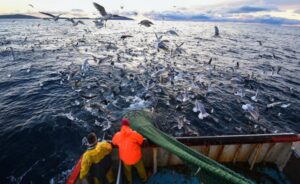
One of the biggest storylines shaping recent seasons is not just the weather—but the collapse and uncertainty of crab populations. In Season 18 and beyond, captains are no longer simply racing each other; they’re racing against a shrinking industry. Quotas have tightened, seasons have shortened, and in some cases, entire fisheries—like the snow crab season—have faced closures due to declining stocks.
This shift has fundamentally changed the tone of the show. Where earlier seasons thrived on competition and haul sizes, recent episodes are filled with tension over whether fishing is even viable anymore. Boats are forced to travel farther, take bigger risks, and innovate in real time. The stakes are no longer just financial—they’re existential.
The Rise of the Next Generation
While the sea remains constant, the faces steering through it are changing. A defining theme of recent seasons is the emergence of a new generation of captains, many of whom are carrying famous legacies.
Jake Anderson (F/V Saga) has solidified his position as one of the fleet’s most compelling leaders. Once a greenhorn battling personal demons, Jake now commands respect—but not without struggle. His leadership is constantly tested by crew issues, mechanical failures, and the relentless pressure to succeed in a failing fishery.
Meanwhile, Clark Pederson, protégé of the legendary Sig Hansen, continues his journey from deckhand to captain. His growth represents the passing of knowledge in one of the world’s most dangerous professions. But stepping into leadership hasn’t been smooth—Clark faces skepticism, high expectations, and the harsh reality that mentorship doesn’t guarantee success.
Veterans Under Pressure
The old guard isn’t fading quietly. Captains like Sig Hansen (Northwestern), Wild Bill Wichrowski (Summer Bay), and Keith Colburn (Wizard) are still central figures—but they’re increasingly confronting their own limits.
Sig, in particular, has had to balance health concerns, family dynamics, and the pressure of maintaining a legacy. His relationship with daughter Mandy Hansen adds a personal dimension, blending family succession with the unforgiving demands of the job.
Wild Bill, known for his tough exterior, has shown a more vulnerable side in recent seasons, especially in his complicated relationship with his son Zack. Their dynamic highlights a recurring theme: the cost of a life at sea on family bonds.
Keith Colburn, ever the strategist, continues to push the limits of endurance and efficiency. But even he is not immune to the mounting challenges—both physical and economic—of modern crab fishing.
Danger Dialed Up
If there’s one thing that hasn’t changed, it’s the danger—and recent seasons have only amplified it. From rogue waves smashing decks to freezing conditions that turn equipment into deadly hazards, the show continues to deliver edge-of-your-seat moments.
Mechanical failures have become a recurring nightmare. Broken hydraulics, failing engines, and malfunctioning pots can turn a routine operation into a life-threatening crisis within minutes. In several episodes, captains are forced to make split-second decisions that could mean the difference between profit and disaster—or life and death.
Adding to the intensity are medical emergencies at sea, where help is hours—or even days—away. These moments strip away any illusion that this is just entertainment. It’s a stark reminder that Deadliest Catch is rooted in real risk.
Strategy Over Strength
Another evolution in recent seasons is the increasing importance of data, technology, and strategy. Captains are no longer relying solely on instinct and experience. Sonar mapping, weather modeling, and even informal intelligence-sharing between boats have become critical tools.
Alliances—once rare—are now more common. Captains sometimes collaborate to locate crab hotspots, sharing information in a bid to survive an increasingly difficult industry. But these alliances are fragile, often breaking down under pressure when competition resurfaces.
Emotional Depth and Human Stories
Perhaps the most notable shift in recent seasons is the show’s deeper focus on personal stories and emotional arcs. Viewers are seeing more than just the job—they’re seeing the toll it takes.
From grief and loss to redemption and resilience, the human side of the fleet has taken center stage. Whether it’s a captain reflecting on decades at sea or a young deckhand proving himself under brutal conditions, the storytelling has become more layered and introspective.
A Show That Mirrors Reality
What makes Deadliest Catch still compelling after so many years is its ability to adapt while staying authentic. The recent seasons don’t just document crab fishing—they capture an industry at a crossroads.
With environmental changes, economic pressures, and generational shifts all converging, the Bering Sea has become a stage for something bigger than television. It’s a story about survival—not just of individuals, but of a way of life.
Looking Ahead
As the series moves into its latest season, one thing is clear: the challenges are only growing. The combination of unpredictable conditions and real-world tragedies continues to shape the narrative in profound ways.
Yet, despite everything, the fleet keeps going.
Because for those who call the Bering Sea home, quitting has never been an option.