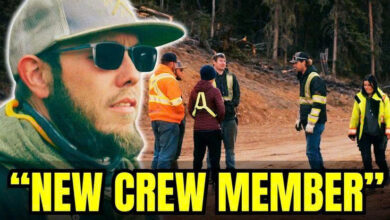
GOLD RUSH CRISIS | Parker Schnabel Brings in GIANT MACHINES to Avoid TOTAL DISASTER!
GOLD RUSH CRISIS | Parker Schnabel Brings in GIANT MACHINES to Avoid TOTAL DISASTER!
GOLD RUSH CRISIS | Parker Schnabel Brings in GIANT MACHINES to Avoid TOTAL DISASTER!

Overall, the gold, it’s been very consistent, consistently poor. We need to figure out how to do close to a thousand ounces.
Parker Schnobble is facing one of the most challenging seasons of his mining career. Right from the beginning, his operation has been plagued by logistical issues, forcing his team to work nonstop for four straight months. The placement of wash plants and the long distances needed to haul pay dirt have seriously impacted production.
His Dominion Creek claim, which holds massive potential, still hasn’t produced the gold needed to meet his aggressive target. While gold output has been consistent, it’s been consistently poor. Parker knows that if he wants to hit his ambitious goal of 1,000 ounces per week, drastic changes need to be made to improve efficiency and move large amounts of pay dirt.
That’s why Parker has introduced two colossal A60 rock trucks to his fleet. These massive machines form a powerhouse hauling team capable of moving up to 600 yd of dirt per hour, nearly double the capacity of standard mining trucks. This major upgrade is crucial in his push to meet the 1,000 per week target.




But running these giant machines at full capacity comes with serious risks. The trucks are being pushed to their limits, and Parker knows that even a single breakdown could bring the entire operation to a grinding halt.
“I’ve talked to my dad a lot about loading trucks. Like, do you get greedy and overload them a lot or do you go with what they’re rated for? And my dad’s like, ‘No, just go with what they’re rated for.’ Maybe it’s cuz my dad says not to do it. It’s why I do it.”
Despite this, he’s willing to take the risk to keep production moving at full speed.
At the long cut, Parker’s team is extracting pay dirt from the downstream end where massive amounts of material must be hauled to keep operations running. The gold yield fluctuates week to week, and Mitch, who oversees the site, is determined to secure a strong cleanup, but a major problem looms over the operation: there are no spare trucks available.
Parker refuses to divert resources from other projects, meaning production must continue with the existing fleet. This puts immense pressure on both the crew and the equipment as the operation has to run 24/7 to stay on track.
Parker knows that to maximize efficiency, he has to take risks. Despite his father’s advice to always follow manufacturer load ratings, Parker admits he often does the opposite. He deliberately overloads the trucks in pursuit of maximum efficiency, pushing them beyond their recommended limits.
At the start of the season, Parker had set his sights on mining 10,000 ounces of gold. However, after multiple setbacks, he has now lowered his expectations to at least 8,000 ounces. Adding to the pressure, only two out of his three wash plants are operational this week.
The third wash plant at Sulfur Creek has shut down after running out of stockpiled pay dirt. With limited crew members available, Parker has no choice but to focus on the unpredictable Dominion Creek claims, including the notoriously difficult long cut.
They’re pulling the per from the downstream end of the long cut. And we got a lot of material that’s got to make it up to Roxan to keep it running.
Among the crew is 22-year-old James CTS, a Greenhorn miner operating one of the massive A60 rock trucks for the first time. Eager to prove himself, James sees this as a valuable learning experience.
But just as he begins to settle into the haul, an alarm suddenly blares from the truck’s control panel. Unsure of what’s gone wrong, James quickly radios Mitch for help. Already dealing with a demanding workload, Mitch reacts with frustration, but instructs James to move the truck out of the way.
As James tries to reposition the vehicle, multiple error codes flash across the dashboard, confirming a serious mechanical failure.
Upon inspection, the crew quickly realizes the extent of the damage. The companion flange connecting the drive shaft to the rear wheels has snapped, causing critical failures in the truck’s brake lines and hydraulic hoses. With 60 tons of pay dirt still loaded in the back, the truck is completely immobilized.
Mitch and the crew waste no time in coming up with a plan. Before the truck can be towed for repairs, the pay dirt must be unloaded. Taylor, the lead mechanic, takes charge of replacing the damaged hydraulic hoses to regain control of the dump box. Only after the truck is emptied can they move it to the yard for further repairs.
Taylor warns that when a drive line snaps, it often leads to extensive collateral damage. The team braces for a labor-intensive repair process, knowing that every minute the truck is down means more lost production.
With one of the A60 rock trucks out of commission, Parker’s operation slows to a crawl. Realizing they can’t maintain production with only one functioning truck, he’s forced to make a tough decision: temporarily shutting down one of the wash plants.
This decision results in a massive setback. With the wash plant offline, the team loses the ability to process 300 tons of pay dirt per hour.
“Hey, we’re going to shut this thing down. We can’t keep up with only one truck here, so let’s uh just let her run out of dirt. We’ll turn her off.”
This directly impacts their gold yield, putting their season goal in jeopardy. The urgency of the repair effort intensifies as the crew works rapidly to unload the remaining dirt from the broken truck.
Knowing that any misstep could lead to dangerous consequences, one team member warns that a mistake could cause a deadly collapse of material, making precision and caution more important than ever.
Tensions rise as Mitch pushes for a quicker resolution. The stress of the situation starts to affect the crew. At one point, a mechanic snaps at Mitch, telling him that if he wants the truck fixed faster, he should grab some tools and lend a hand himself.
Taylor and his mechanical team work tirelessly to replace the truck’s compromised systems. They begin by installing new brake lines and electrical wiring before carefully positioning a replacement drive shaft. Every step of the repair process requires absolute precision. Any misalignment could cause further mechanical failures and set them back even more.
Once the drive shaft is lifted into place, the team carefully secures the bolts, making sure everything is aligned correctly. After double-checking their work, Taylor confirms that the truck is ready to return to service.
Mitch, relieved by the progress, prepares to resume hauling operations. Within just 6 hours, the A60 rock truck is back in motion. The team wastes no time getting it on the road, hauling pay dirt to the plant once again.
Despite the setback, Parker refuses to let mechanical failures derail his season. He knows that keeping these monster dirt haulers moving is crucial to success. A single broken truck has already shown how easily production can come to a complete standstill, making every piece of equipment vital to the mine’s overall productivity.
With the crisis averted, the wash plant is back in operation.
“You know, definitely not the way we thought the day was going to go, but we got the trucks back up and running. We’re back sloo. We’re going to try to keep it that way.”
However, Parker and his crew remain on high alert, knowing that any future breakdowns could spell disaster. The season continues, and the fight for gold remains relentless.
After a grueling week filled with costly equipment failures, Parker faces yet another blow: disappointing weigh-in numbers. The team had scoured the gold room in hopes of hitting triple digits, but the final result was underwhelming.
Unfortunately, the numbers show a decline from the previous week, a trend Parker simply cannot afford to continue.
With the season now at its halfway point, the total gold recovered stands at just over 4,175 ounces, far from the 8,000-ounce target. Parker acknowledges the milestone but knows that two consecutive weeks of declining numbers are a serious cause for concern.
He makes it clear that the team must ramp up production immediately if they have any chance of meeting their season goal.
Parker’s relentless pursuit of efficiency has always come with a cost. Overloading the A60 rock trucks has significantly increased hauling capacity, but it also puts extreme stress on the equipment. His father’s warning about sticking to manufacturer load limits wasn’t just a precaution. It was based on years of experience.
The catastrophic breakdown of one of the trucks proves that pushing machinery beyond its limits can have severe consequences. While Parker’s gamble paid off in the short term, the long-term risks remain.
Every piece of equipment on site plays a critical role in keeping the operation running. A single failure can lead to a chain reaction of delays, forcing shutdowns, and increasing production costs.
The financial impact of these setbacks is enormous, not just in lost gold production, but also in repair costs, labor hours, and fuel consumption.
The bigger question now is whether Parker will change his approach. Will he continue to push his machines beyond their limits in pursuit of higher output? Or will he adopt a more cautious strategy to ensure long-term stability?
With the season’s success hanging in the balance, every decision he makes could determine whether he reaches his 8,000-ounce goal or falls short.
Before heading off to continue overseeing operations, Parker bags the gold and emphasizes the urgency of improving results. The crew understands the reality of the situation. There’s still a long road ahead, and time is running out.
Every ounce mined in the coming weeks will be critical to achieving their season goal. With mounting pressure and little room for error, Parker and his team must give everything they have to turn things around.
The fight for gold is far from over.